
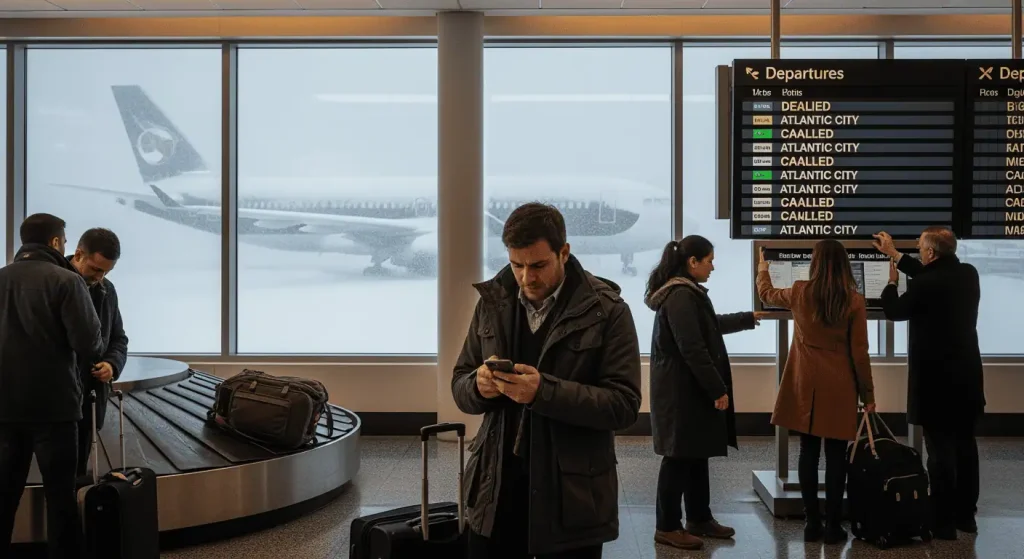
Winter travel can turn a straightforward pickup into a moving target: departure times shift, gates change, baggage takes longer, and the person waiting on the curb gets stuck guessing. If you’re arranging transportation for yourself, a family member, or a business traveler, the goal is simple—reduce uncertainty and keep the handoff from plane to vehicle smooth. This guide explains how to plan for a winter flight delay airport pickup Atlantic City scenario using clear communication, smart buffers, and a pickup process that works even when the schedule doesn’t. In colder months, small delays can cascade quickly, so having a repeatable plan matters.
Bottom Line Upfront: What Makes Winter Airport Pickups Easier
- Plan around real-time flight status, not the original itinerary, and be ready to adjust pickup timing.
- Choose a pickup method in advance (curbside vs. inside meet-and-greet) so everyone knows the handoff plan.
- Build a buffer for deplaning, baggage claim, and winter road conditions—especially at peak travel times.
- Use one communication thread (text or app) with the traveler, the coordinator, and the driver to avoid mixed messages.
- Confirm the “last-mile details”: terminal/door, traveler’s luggage count, and the best contact number.
How Winter Flight Delays Change the Airport Pickup Playbook
A typical airport pickup is timed to a scheduled arrival. Winter disruptions make that approach fragile because the arrival time is only one part of the process. A better approach is to coordinate around milestones that happen after the plane lands.
Key milestones to plan around
- Wheels down: The aircraft lands, but the traveler may still be 10–30+ minutes from exiting due to taxiing and gate availability.
- Deplaning: Time varies by aircraft size, seat location, and mobility needs.
- Baggage claim: Checked bags add uncertainty; winter operations can slow unloading and carousel timing.
- Exit point: The traveler reaches curbside/ride pickup area or a designated meeting point.
When you plan around these milestones, you can adjust pickup timing without scrambling. That’s the core of a low-stress winter pickup: flexible timing + clear meeting instructions.
The Real-World Costs of Getting the Timing Wrong
Winter delays don’t just affect convenience—they can create practical problems that are easy to avoid with a better plan.
- Extra waiting and confusion: If the traveler exits at a different door or the driver is staged elsewhere, the “find each other” process becomes the trip.
- Missed connections in your schedule: Late pickups can push dinner reservations, meetings, or shift changes—especially for business travelers.
- Higher stress at the curb: Cold temperatures and crowded pickup zones make prolonged curbside waiting uncomfortable and hectic.
- Communication breakdown: Multiple people texting different details often leads to contradictory instructions.
Common Winter Pickup Mistakes (Quick Checklist)
- Relying on the scheduled arrival time only: Use live flight status and post-landing milestones to set expectations.
- Not clarifying baggage needs: A traveler with multiple checked bags typically needs more time and more trunk space.
- Skipping the meeting-point plan: “I’ll see you outside” is vague—agree on a specific door/zone or an indoor landmark.
- Using too many communication channels: Calls, texts, and emails at once can create conflicting instructions.
- Forgetting winter-ready details: Footwear, coats, and mobility considerations matter more when sidewalks and curbs are slick or crowded.
- Assuming curbside is always best: In heavy congestion, an indoor meet-up can be simpler than circling outside.
A Stress-Reducing Pickup Plan You Can Reuse Every Time
- Step 1: Collect essentials before travel day. Flight number, airline, traveler’s full name, mobile number, and whether they’re checking bags.
- Step 2: Decide on the handoff style. Choose curbside pickup or inside meet-and-greet based on traveler comfort and complexity.
- Step 3: Set a realistic buffer. Add extra time for taxiing, deplaning, baggage claim, and winter road conditions.
- Step 4: Agree on a single meeting point. Example: “Exit Door B, stand by the second column,” or “Meet at the coffee shop near baggage claim.”
- Step 5: Use one message thread. Keep traveler + coordinator + driver aligned with the same updates.
- Step 6: Send a simple ‘ready’ signal. Traveler texts “bags in hand” or “at curb” to trigger the final approach.
- Step 7: Keep a backup plan. If the pickup area is congested, switch to a pre-agreed alternate door/zone or indoor landmark.
Professional Insight: The Small Detail That Prevents Most Confusion
In practice, we often see that the smoothest winter pickups come from one habit: confirming the exact meeting point in plain language (door/zone/landmark) before the plane lands, then switching to milestone-based updates (like “deplaned” and “bags in hand”) instead of chasing the scheduled arrival time.
When It’s Smart to Use a Chauffeured Pickup Instead of DIY
DIY pickup can work for simple itineraries, but winter disruptions raise the stakes. Consider professional support when:
- The traveler is a VIP, client, or executive and you want a consistent, polished arrival experience.
- The itinerary is tight (meetings, reservations, or connecting travel) and delays could cascade.
- The traveler needs extra help due to mobility needs, heavy luggage, or traveling with children.
- You’re coordinating remotely and can’t easily pivot if the pickup plan changes.
- Weather and road conditions are uncertain and you want an experienced, prepared driver handling the trip.
Common Questions Answered About Winter Airport Pickups
How should I time a pickup when the arrival time keeps changing?
Use live flight status for awareness, but coordinate around milestones: deplaned, bags in hand, and at the meeting point. This reduces guesswork when the schedule shifts.
Is curbside pickup or an indoor meet-up better in winter?
It depends on congestion, traveler comfort, and luggage. Curbside can be fast when it’s moving; an indoor meet-up can be calmer if the pickup area is crowded or the traveler needs extra time.
What details should I share with the driver ahead of time?
Share the flight number, traveler name, best contact number, luggage count, and the agreed meeting point. If there are mobility needs or special requests, include those early.
What if the traveler’s phone dies or they lose service?
Set a backup plan in advance: a specific indoor landmark and a time window to wait there. If possible, provide an alternate contact (travel companion or coordinator).
How can I make pickups smoother for business travelers?
Keep communication minimal and structured: one thread, clear meeting point, and milestone updates. Confirm whether they prefer a quiet ride, need a quick stop, or have timing constraints after landing.
Taking the Stress Out of Winter Airport Pickups
Winter delays are frustrating, but the pickup doesn’t have to be. If you plan around milestones, set a precise meeting point, and keep communication in one place, you can handle shifting arrival times without confusion. The goal is a smooth handoff—warm, safe, and organized—so the traveler can get on with their day. For travelers and coordinators in and around Atlantic City, NJ, a consistent process is the simplest way to reduce winter pickup stress.
Learn More About Our Services
Discover how we can help you achieve your goals.