
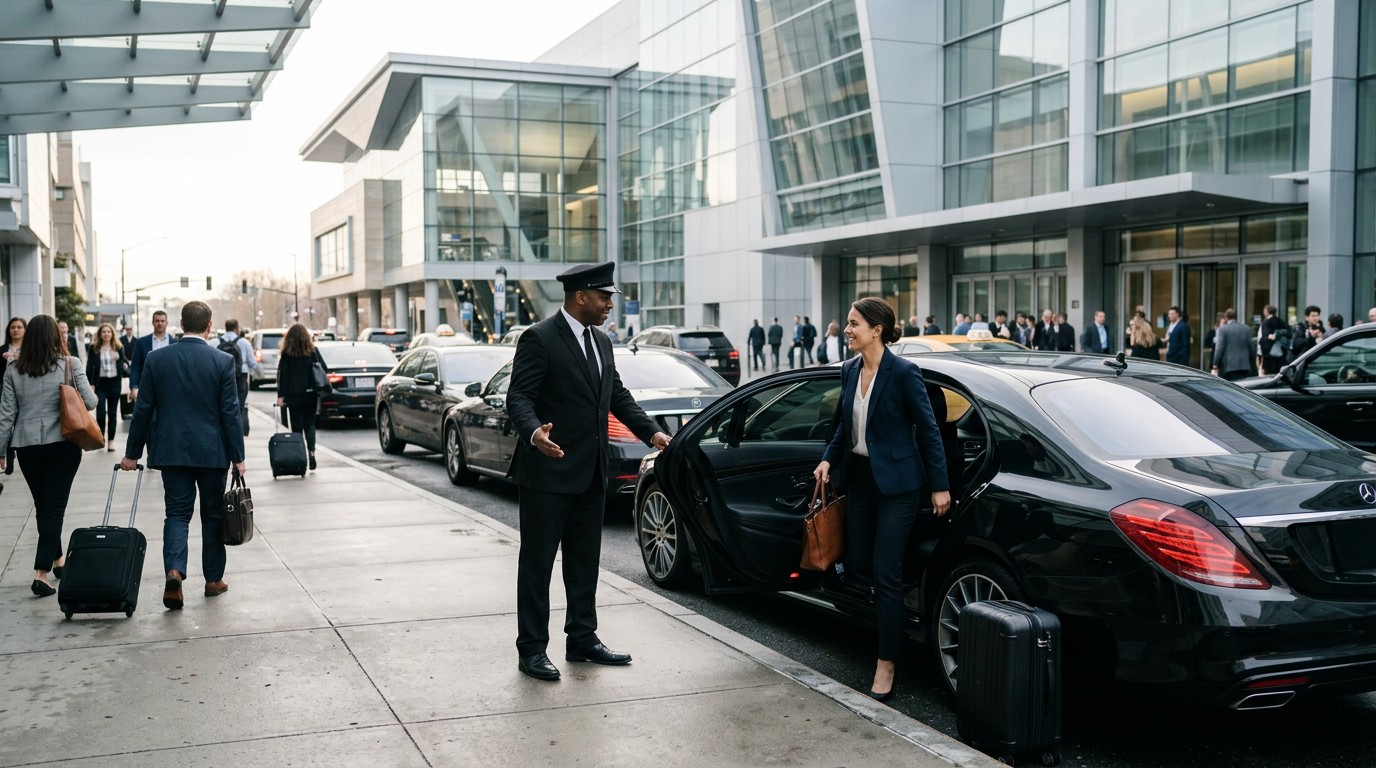
Convention transportation can feel simple until you’re juggling flight delays, badge pickup, a packed agenda, and a team that needs to arrive composed—not frazzled. This guide is for conference attendees, exhibitors, planners, and executive travelers who want a reliable plan for getting between the airport, hotel, and venues with fewer surprises. The goal is to help you choose the right ride type, set expectations with your group, and avoid common scheduling mistakes that create stress and missed connections. As fall approaches, schedules often tighten and daylight shifts can make early pickups feel even earlier. Planning your ground travel details ahead of time can make convention transportation smoother and more predictable.
Convention Ride Planning
- Build your schedule around “must-hit” moments (registration windows, booth setup, keynote start), then add buffer time for traffic and loading.
- Match the vehicle to the mission: solo executive pickup, small team transfers, or multi-stop shuttle-style movement require different setups.
- Use one point of contact for changes so drivers and riders aren’t getting conflicting updates from multiple people.
- Plan for luggage and gear (banner stands, sample cases, rolling racks) so you don’t discover space issues at the curb.
- Confirm pickup instructions in writing: exact meeting point, name/phone, and what to do if a rider’s phone dies.
How Convention Transportation Typically Works
For conferences, transportation usually falls into a few repeatable patterns: airport-to-hotel transfers, hotel-to-venue runs, and short “between meetings” hops. A professional car service model generally focuses on pre-scheduled pickups with clear meeting points, rider names, and timing windows—so you’re not competing for a last-minute ride when everyone exits a session at once.
Common trip types
- Individual executive transfers: one rider (or a pair) with a tight schedule and minimal tolerance for delays.
- Team movement: multiple people leaving together, often with staggered arrival flights and different hotel check-in times.
- Exhibitor logistics: early arrivals, heavier luggage, and more curbside loading time for equipment.
- Multi-stop routing: picking up colleagues at different hotels before heading to the venue.
What to provide when booking
- Pickup and drop-off addresses (include hotel entrance details if there are multiple)
- Flight details for airport pickups (airline + flight number helps align with real arrival times)
- Number of passengers and number of bags (plus any oversized items)
- Primary contact name and phone number (plus a backup contact)
- Your “hard start” times (keynote, meeting, booth open) so timing can be planned around them
Why Timing and Logistics Matter for Conferences
The biggest costs of poor planning aren’t just dollars—they’re credibility and energy. A late arrival can mean missing a meeting you can’t reschedule, showing up flustered to a client dinner, or losing setup time when the exhibit hall opens.
- Time risk: Conferences create predictable surges (session breaks, end-of-day exits). If you book pickups at the same time as everyone else, waits can increase.
- Budget risk: Last-minute changes, extra stops, or underestimating vehicle size can lead to rebooking or adding vehicles.
- Professional risk: Arriving scattered can undercut the impression you want to make—especially for sales teams and speakers.
- Comfort and safety: Crowded curb areas and rushed loading increase the chance of leaving items behind or misplacing gear.
Atlantic City–Specific Planning Details
Atlantic City conventions have a few location quirks that can change your plan—especially if you’re coordinating a team. Use these as practical starting points and adjust based on your venue, hotel, and flight times.
- Which airports attendees typically use: Many travelers fly into Atlantic City International (ACY) for proximity, or use larger hubs like Philadelphia (PHL) and Newark (EWR) for more flight options. General planning note: the farther the airport, the more you should protect your schedule with larger buffers and fewer same-day “must-hit” commitments.
- Bridge/shore traffic can be time-sensitive: Industry estimate: expect heavier inbound traffic toward Atlantic City late morning through early evening on Fridays, and heavier outbound traffic late morning through early evening on Sundays—especially on event weekends. If you’re arriving during those windows, plan earlier departures and avoid tight connections.
- Venue and hotel entrances aren’t always straightforward: Boardwalk properties and casino hotels can have multiple curb areas (main entrance, valet, rideshare zone, bus/shuttle loop). Pick the exact entrance and name it in writing so nobody is circling with luggage.
- Loading time is longer than you think for exhibitors: If you have banner stands, sample cases, or rolling racks, curbside loading can take longer than a standard hotel pickup. Build a dedicated loading block instead of assuming “grab-and-go.”
- Congestion spikes around session breaks: Industry estimate: pickups scheduled right at the top of the hour (or immediately after a keynote ends) can face longer waits due to simultaneous exits. If you can, schedule 10–20 minutes after the crowd surge or stage pickups in two waves.
Common Convention Travel Mistakes
- Booking the wrong vehicle size: “We’ll pack light” often turns into two suitcases per person plus a demo kit. Count bags honestly.
- Ignoring loading time: Exhibitor gear and group photos at the curb turn a 2-minute pickup into 10 minutes quickly.
- Scheduling pickups with zero buffer: A plan that works only if everything goes perfectly usually doesn’t.
- Letting everyone text the driver: Multiple riders sending different instructions creates confusion. Use one coordinator.
- Not defining the meeting point: Large hotels and venues can have multiple entrances. “Front door” is not a location.
- Forgetting return logistics: The ride home (airport, dinner, after-hours) often gets planned last—and that’s when availability can be tight.
A Practical Plan for Smooth Chauffeured Service
- Map your “anchor events” first: keynote start, client meetings, dinner reservations, booth setup windows.
- Set two times for each pickup: the ready time (when riders are downstairs) and the departure time (when the car should roll).
- Create a simple rider sheet: names, phone numbers, hotel, pickup time, and luggage notes—one page is enough.
- Choose a coordinator: one person handles updates, changes, and “we’re coming down now” messages.
- Plan for gear: note oversized items (display cases, garment bags, golf clubs, sample bins) so the right vehicle is assigned.
- Use clear pickup instructions: specify entrance, cross street if helpful, and what the rider should do if they don’t see the vehicle immediately.
- Stagger group pickups when possible: splitting a team into two close pickup times can reduce curb congestion and loading delays.
- Confirm the return trip early: schedule airport departures and end-of-conference runs before the agenda fills up.
Copy-Paste Templates
Template 1: Rider sheet
Paste this into an email or shared doc and fill it in. Keep it to one page so it’s easy to reference on a busy day.
CONVENTION RIDER SHEET — ATLANTIC CITY

Coordinator (single point of contact):
Name:
Cell:
Backup contact:

Hotel / Venue:
Primary pickup entrance (exact):
Alternate pickup entrance (if needed):

Riders:
1) Name | Cell | Pickup time (READY / DEPART) | Bags (count) | Oversize items | Notes
2) Name | Cell | Pickup time (READY / DEPART) | Bags (count) | Oversize items | Notes
3) Name | Cell | Pickup time (READY / DEPART) | Bags (count) | Oversize items | Notes

Airport pickup (if applicable):
Airport (ACY / PHL / EWR / other):
Airline + Flight #:
Landing time:
Meeting point instructions (terminal/baggage claim/door number):

Drop-off details:
Exact address:
Entrance / loading area:
Hard start time at destination:

If rider can’t find the vehicle:
Step 1: Call/text coordinator
Step 2: Move to (specific landmark/door):
Step 3: Wait time before escalation:
Template 2: Sample schedule
Example assumes a 9:00 AM keynote and an 8:00 AM booth setup window. Adjust the times to your agenda and add more buffer if you’re coming from a farther airport or moving gear.
SAMPLE DAY PLAN (WORKING BACKWARD)

9:00 AM  Keynote starts (HARD START)
8:40 AM  Arrive at venue + walk/security/badge buffer (20 min)
8:20 AM  Vehicle DEPARTS hotel (departure time)
8:10 AM  Team READY in lobby/curb (ready time) + headcount check (10 min)
8:00 AM  Buffer for elevator delays / last-minute room runs (10 min)
7:50 AM  Breakfast ends (or grab-and-go pickup)

--- Exhibitor setup block ---
8:00 AM  Booth setup window opens (HARD START)
7:40 AM  Arrive at venue/loading area + unload buffer (20 min)
7:15 AM  Vehicle DEPARTS hotel with gear (25 min buffer for loading/traffic)
6:55 AM  Gear staged in lobby/curb (READY) + load time (20 min)
6:40 AM  Team meets to confirm inventory + badges/tools (15 min)

--- End-of-day return (example) ---
5:00 PM  Exhibit hall closes (crowd surge)
5:15 PM  Pickup window starts (avoid immediate curb rush)
5:25 PM  Vehicle DEPARTS venue
The Small Detail That Prevents Big Hassles
A reliable approach is to treat transportation like a scheduled meeting: agree on one “all-in” meeting point, set a firm ready time, and assign one coordinator to communicate changes. That structure reduces curbside confusion, prevents multiple people from sending conflicting instructions, and helps keep the rest of the day from slipping.
When It’s Smart to Use a Chauffeur Instead of Wingin’ It
- You have a fixed start time (speaker slot, VIP meeting, media hit) where arriving flustered is not an option.
- Your team is moving with equipment and you need predictable loading space and coordinated pickups.
- You’re coordinating multiple arrivals and want one plan instead of multiple separate rides.
- You need multi-stop routing across hotels, venues, and dinner locations without rebooking each leg.
- You want a consistent experience for clients or executives, especially during busy conference periods in Atlantic City, NJ.
Frequently Asked Questions
How early should I schedule an airport pickup for a conference trip?
Aim to schedule with enough buffer for baggage claim, walking time, and normal traffic variability. If you have a hard start time (like a keynote or booth setup), build the schedule backward from that commitment rather than from your flight time alone. If you’re flying into a farther airport like PHL or EWR, add extra cushion for highway/bridge variability.
What details should I send to avoid confusion at pickup?
Share the exact address, the specific entrance (if there are multiple), the rider’s name and phone number, and a backup contact. For airports, include the airline and flight number so timing can align with actual arrival information. For Atlantic City hotels, add the exact curb area (main entrance vs. valet vs. rideshare zone) to avoid circling.
Can a car service handle multiple hotel stops for a team?
Yes, multi-stop routing is common. Provide the stop order, the number of riders at each stop, and realistic ready times so the route can be planned without rushing curbside loading.
How do I choose the right vehicle size for people plus luggage?
Count passengers and bags honestly, then add any oversized items (display cases, garment bags, sample bins). If you’re unsure, describe the gear rather than guessing—space planning is easier with specifics.
What’s the best way to keep changes from turning into chaos?
Use one coordinator for updates and keep instructions consistent. A single message thread (or one point of contact) helps prevent conflicting directions and missed pickups.
Moving Forward
Conference days run smoother when your transportation plan is built around hard start times, realistic loading, and clear communication. Choose the right ride setup for your group, confirm pickup details in writing, and assign one person to manage changes. A little structure upfront makes it easier to stay focused on meetings, networking, and results.
Atlantic City Car and Limo provides pre-scheduled convention transportation for airport transfers, hotel-to-venue runs, and multi-stop routing. If you’re coordinating a team, you can keep one point of contact for updates, share a rider sheet for names/times/gear, and set clear meet-and-greet instructions (including the exact entrance or pickup zone) to reduce day-of confusion.