
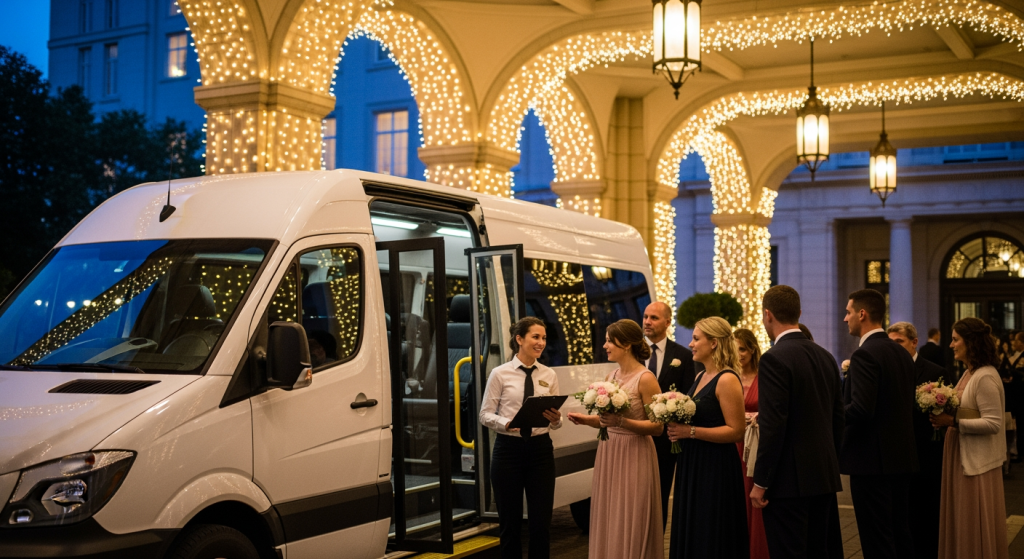
Planning an Atlantic City wedding shuttle sounds simple until you’re coordinating two families, multiple hotels, a ceremony start time, and a reception timeline that will (inevitably) shift a little. This case study is for couples, planners, and anyone tasked with guest transportation who wants fewer moving parts, fewer “Where are you?” texts, and a smoother flow between locations. In the summer months, guest lists often include more out-of-towners, which can make transportation coordination even more important. The goal isn’t perfection—it’s a plan that stays calm when the day gets busy.
The Essentials for a Smooth Wedding Shuttle Plan
- Start with a timeline map: list pickup windows, ceremony start, photo time, cocktail hour, and last-call departures.
- Use pickup “windows,” not single times: buffers reduce stress when hair/makeup, elevators, and group wrangling take longer than expected.
- Separate guests from VIPs: one plan for general guest loops, another for the couple/wedding party to protect the schedule.
- Confirm headcounts by stop: knowing how many people board at each hotel helps right-size vehicles and reduce empty seats.
- Assign a point person: one coordinator (planner, trusted friend, or venue contact) centralizes day-of updates.
- Communicate simply: one shared message with pickup locations, windows, and “what to do if you miss it.”
How This Wedding Shuttle Plan Was Built
Background: A couple hosted a ceremony and reception at separate locations, with guests staying across multiple nearby hotels. Several guests were unfamiliar with the area, and the couple wanted to discourage drinking and driving while keeping arrivals orderly.
The challenge: The day included overlapping priorities: guests needed reliable loops, the wedding party needed flexibility for photos, and the couple wanted to avoid late arrivals without creating an overly rigid schedule. The biggest risk was “micro-delays” stacking up—late elevators, missing a pickup because someone ran back to the room, or confusion about which entrance to use.
The approach: We treated transportation like its own mini-itinerary. Instead of one massive schedule, we built three simple layers: (1) guest shuttle loops, (2) a dedicated plan for the wedding party, and (3) an end-of-night return plan with clear departure windows. We also standardized pickup instructions so every message used the same format: where to stand, what time window, and who to contact.
The Real-World Cost of Transportation Confusion
When guest transportation is unclear, the impact shows up fast—usually in the form of delayed ceremonies, rushed photo timelines, and a reception that starts with a trickle instead of a moment. It can also create avoidable expenses: last-minute rideshares, parking fees, or additional staff time spent directing people. Safety matters too; a clear shuttle plan can reduce the temptation for guests to drive after celebrating. For weddings in Atlantic City, NJ, those pressures can increase when guests are split across multiple properties and unfamiliar with pickup logistics.
6 Common Wedding Shuttle Mistakes
- Listing one exact pickup time: a single time turns small delays into missed rides; use a window.
- Too many pickup points: extra stops feel helpful, but they can slow the loop and confuse guests.
- No signage plan (or unclear directions): guests often wait at the wrong door if instructions aren’t specific.
- Mixing VIP and guest needs: the wedding party’s photo schedule rarely matches the guest loop.
- Forgetting the “after-party” crowd: late-night returns need a plan, even if it’s just two clear departure windows.
- No day-of point person: when everyone texts the couple, the timeline suffers.
A Practical Shuttle Playbook You Can Copy
- Draft a transportation timeline: include buffers before ceremony seating and before grand entrances.
- Choose 1–2 primary pickup hubs: consolidate stops and tell guests exactly where to stand.
- Build two tracks: guest loop + separate wedding-party plan (even if it’s just one dedicated vehicle).
- Set “last shuttle” expectations: publish final return windows so guests can plan their night.
- Send one clean message: share pickup windows, locations, and a backup instruction if a guest misses a run.
- Confirm details in writing: vehicle count, pickup hubs, and timing windows—so everyone’s aligned.
What Keeps the Day Calm
In practice, we often see the smoothest wedding transportation days come down to one thing: decision simplicity. When guests don’t have to guess which door, which time, or which ride is “theirs,” everything runs cleaner—and the couple gets fewer interruptions during the moments that matter.
When It’s Smart to Bring in a Professional Shuttle Service
- Your guests are split across multiple hotels: routing and timing get complex quickly.
- Ceremony and reception are in different places: you’ll need coordinated loops and buffers.
- You have a tight photo or venue timeline: delays can cascade into meal service and key events.
- You want to reduce rideshare uncertainty: a structured plan is easier for groups to follow.
- You need VIP flexibility: the wedding party often benefits from a separate, adjustable plan.
Common Questions About Wedding Shuttles
How far in advance should we plan guest transportation?
As soon as you know your ceremony and reception locations and have a sense of where guests will stay. The earlier you outline pickup hubs and timing windows, the easier it is to communicate clearly and avoid last-minute changes.
Do we need separate transportation for the wedding party?
Not always, but it often helps. The wedding party typically has a different schedule (photos, early arrivals, multiple stops). A separate plan can protect the main guest loop from delays.
What information should we send guests?
Keep it simple: pickup location (specific entrance), pickup time window, the order of stops (if relevant), and what to do if they miss a shuttle. One clear message beats multiple updates.
How do we handle the end-of-night return?
Many couples use two return windows (for example, one earlier and one later) so guests can choose. The key is to publish the final departure windows clearly so people can plan.
Can a shuttle plan reduce day-of stress?
Yes—when it’s built around buffers, clear pickup hubs, and a single point of contact. The goal is fewer decisions for guests and fewer timeline interruptions for the couple.
Your Next Steps
A wedding shuttle plan works best when it’s built like a simple system: clear hubs, realistic timing windows, and separate needs for guests versus VIPs. The case study takeaway is straightforward—reduce decisions for guests, protect the wedding party timeline, and communicate in one clean message. If you’re coordinating multiple locations and want a plan that stays organized even when the day gets busy, professional support can help you tighten the details.
Get Your Free Quote
Find out how we can help with a no-obligation quote.